12.June.2025

Employee interview 06/2025: Richein Bartsch

Employee interview 06/2025: Richein Bartsch
Arrow
  • News

The interview series with employees of the dataglobal Group

Richein, tell us briefly how you came to the dataglobal Group and what particularly fascinates you about software development.

Hi, I joined dataglobal in January 2019 because I was interested in developing technologies from scratch. Initially, I was an application developer in consulting for a year and then joined the core development teams.

What I love about software development is developing solutions that drive business processes forward and solve problems. For example, creating automation solutions for tasks that nobody wants to do manually. I find it exciting to see how good, scalable solutions that I have worked on are used in practice. It’s just as fulfilling as building something “by hand”, like a carpenter does with wood

Has there been a moment in your career to date that has particularly shaped you or encouraged you in your decision to become a developer?

I would say that was a long time ago, before I started my career. When I was 11 years old, I was already learning programming on my own at home because I was interested in how video games and software are developed. As a teenager, I was already developing small tools and modifications for computer games. It was very fulfilling to see how something I had developed myself worked, and I knew even then that I wanted to become a software developer to develop solutions for practical applications in the real world.

Lately, I would say that the work myself and the rest of our team have been doing on the dgIdentity and customer portal platform, which utilizes modern technologies and techniques, is the highlight so far. It’s a solid foundation that we can build a lot on in the future so that other applications can be connected to it. Eleven with Expurgate is already using it and vysoft is also in the process of using it.

Kevin spoke of a “dedicated team” in the last interview. How do you experience the collaboration in your team on a day-to-day basis?

The collaboration and working as a team is a highlight. We are really flexible and always open and have our own processes for how we work as an agile team, and have done so in the same way for years. Even though we all have our defined roles, each of us wears multiple hats. Most of the time our daily status calls can last up to an hour, but I think they are really useful, everyone is always on the same page, and most of the time we only need that call and everyone can work on their tasks, we rarely have any kind of blocker that hinders development. Of course we have a lot of fun and joke a lot with each other. It’s a very relaxed team with a lot of experience, so you can learn a lot from each other. We are like that in a close-knit team.

What is your typical way of working – do you have certain routines or tools that have proved particularly successful?

I would say we are very dynamic and don’t have too many specific routines. Our daily status meeting 5 days a week is the biggest routine we have. However, we regularly check if we need new routines/processes and usually try something out but quickly realize it may not work. Technically, we have routines to ensure code quality. Every line of source code that we bring into our main development branch is checked by other team members, which is called a “code review”. This means that other team members review the pull requests to identify potential problems and make suggestions, which are of course also used for learning. And our QA team always performs a full set of tests before deployment to production. Before any major implementation of a new feature or change, we conduct a separate brainstorming session that focuses intensively on the architecture.

How do you deal with unexpected technical hurdles as a team – is there an example where you found a particularly creative or pragmatic solution?

Technical hurdles are a natural part of software development, whether expected or unexpected, and I think we’re really good at recognizing potential hurdles that may arise in the future. We try very hard to see the bigger picture before we implement anything, but also in terms of the technological landscape to anticipate potential advantages and disadvantages in the coming years that may arise from using a tech stack, for example, or what potential new technologies or concepts may emerge in the future and how we can best prepare. Things change quickly in the IT world, so you can’t assume that what is appropriate today will still be appropriate in 5 years’ time. We have to plan and build accordingly. Recently we have solved potential performance issues in the future by making some of our services architecturally flexible and strong by using gRPC for inter-service communication, caching and message queues. We have also found a more efficient way to issue tokens in our identity system, similar to using our APIs, but it would be too technical to go into detail here.

If you had one wish for your project or your way of working – what else would you like to try out?

I’m always interested in learning and using new programming languages because many have interesting new ideas or workflows, but it’s not practical to use them in important projects where big programming languages like C#/C++/Go/Java are used instead. Exotic languages come with risks, and of course not everyone in a development team wants to learn yet another new language. For most developers, learning and using these languages is therefore reserved for hobby projects at home for the time being 😊

I have been interested in the Odin programming language for a year now and often use this language for hobby projects in my spare time.


Thank you very much for the interview, Richein!

Apply now to the dataglobal Group

Are you interested in becoming part of the dataglobal Group and working with us to realize the vision of the Digital Workplace for our customers? We are always on the lookout for new talent, whether in software development or in other areas such as sales, consulting, etc.

Take a look at our current vacancies and see if there is a suitable position for you. We look forward to hearing from you!
You might also be interested in

DATEV online interface in windream ECM

learn more

Merger forms new leading provider of HR software solutions in Germany

learn more

DMS as a strategic IT topic: Why you should act now as an IT decision-maker

learn more

Digital challenges in accounting: from paper invoices to a networked financial system

learn more
23.May.2025

“Top Service”: vysoft Receives Quality Seal Once Again

“Top Service”: vysoft Receives Quality Seal Once Again
Arrow
  • News

Auszeichnung für “Top Service” – Ein Beleg für Kundennähe und Innovationskraft

Wir freuen uns sehr, dass unsere Lösung vysoft erneut mit dem Qualitätssiegel „Top Service“ ausgezeichnet wurde! Diese Ehrung durch das Deutsche Innovationsinstitut für Nachhaltigkeit und Digitalisierung bestätigt einmal mehr unseren Anspruch, neben der Realisierung technologischer Innovationen auch in puncto Kundenzufriedenheit, Servicequalität und Anwenderfreundlichkeit zu überzeugen.

vysoft – Das Stadtplanungs- und Logistikbüro der Data City

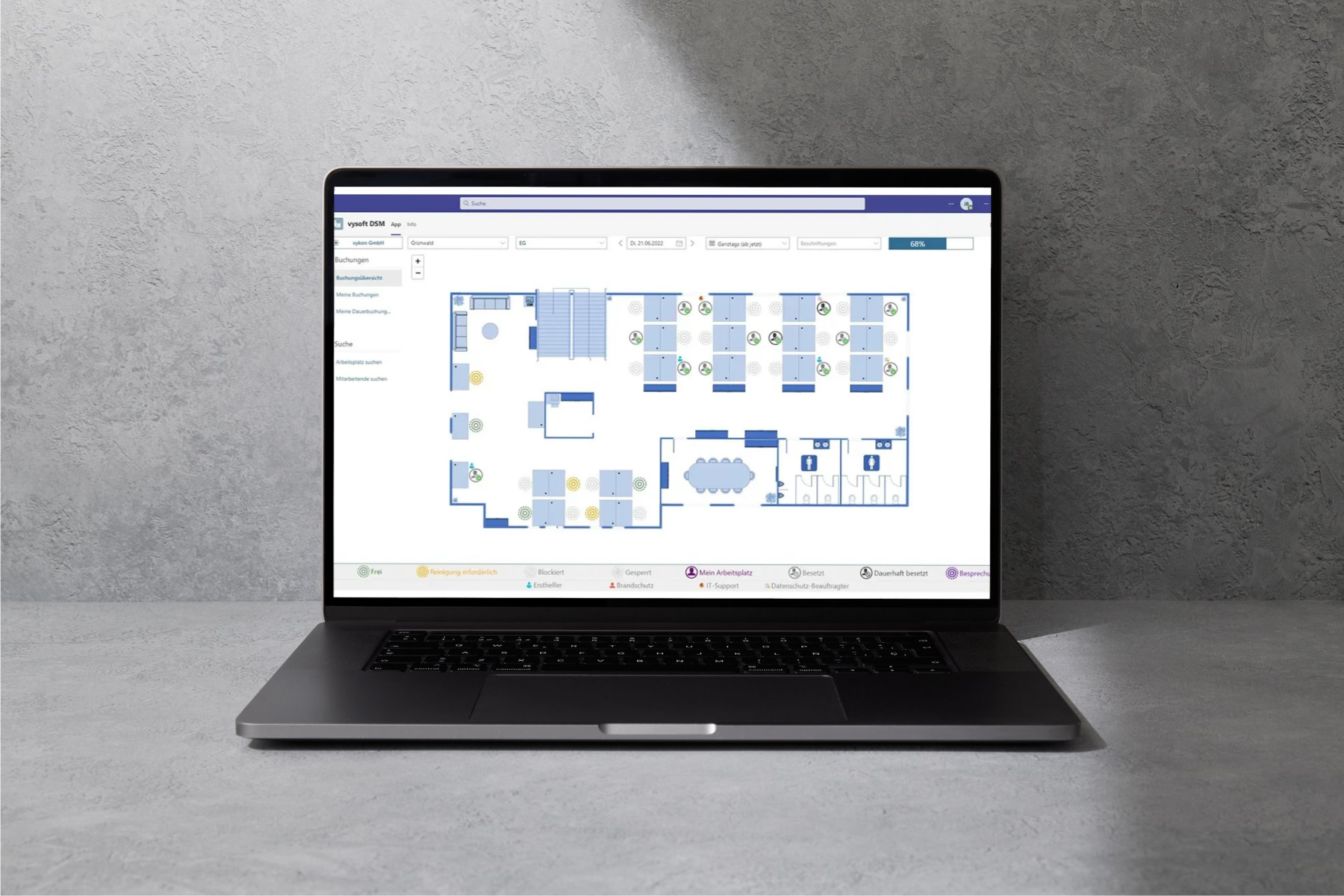
vysoft ist unsere umfassende Plattform für digitales Ressourcenmanagement – ein zentrales Element moderner Arbeitswelten. Ob Desk Sharing, Raum- oder Fuhrparkverwaltung, Parkplatzmanagement oder die Organisation von Notfallunterkünften: vysoft sorgt dafür, dass Ressourcen dort verfügbar sind, wo sie gebraucht werden – effizient, flexibel und nutzerfreundlich.

Doch vysoft ist weit mehr als nur ein Tool. Es ist das Stadtplanungs- und Logistikbüro der Data City – der digitalen Stadt für hybride Arbeitswelten. Somit stellt vysoft sicher, dass das Leben und Arbeiten in der Data City reibungslos funktioniert. Es ordnet Abläufe, koordiniert Räume und sorgt für eine optimale Ressourcennutzung – voll integriert in die gewohnte Arbeitsumgebung der Bewohner der Data City.

Die Data City – Infrastruktur für hybride Arbeitswelten

Die Data City ist unser Modell für eine vollvernetzte, digitale Arbeitsumgebung. Sie vereint alle Aspekte eines modernen Digital Workplace: Dokumentenmanagement, Prozessdigitalisierung, Cyber Security und das Ressourcenmanagement mit vysoft.

vysoft erneut ausgezeichnet

Dass vysoft erneut das Qualitätssiegel „Top Service“ erhalten hat, ist für uns ein starkes Zeichen. Die Auszeichnung basiert auf einem unabhängigen Prüfprozess und bestätigt die hervorragende Qualität unseres Kundenservices, unsere schnelle Reaktionsfähigkeit und die konsequente Ausrichtung auf die Bedürfnisse unserer Nutzer.

You might also be interested in

DATEV online interface in windream ECM

learn more

Merger forms new leading provider of HR software solutions in Germany

learn more

DMS as a strategic IT topic: Why you should act now as an IT decision-maker

learn more

Digital challenges in accounting: from paper invoices to a networked financial system

learn more
20.May.2025

Email security in transition: Why the need for sovereign German solutions is growing right now

Email security in transition: Why the need for sovereign German solutions is growing right now
Arrow
  • News

The takeover of the German email security provider Hornetsecurity by the US group Proofpoint is causing unrest in the industry – and rightly so. This is because it shows once again how important it is to consciously opt for email security solutions that are not only technologically convincing, but also uncompromising in terms of data protection, location and sovereignty.

In times of growing geopolitical tensions, complex regulatory requirements and increasing cyber threats, the question is coming into focus: Who do we trust with our email communication – and under whose legal framework is our data processed?

The takeover of Hornetsecurity: A factual classification

Hornetsecurity was acquired by Proofpoint, a leading provider of IT and email security based in the USA, with effect from the beginning of 2025. Proofpoint in turn belongs to the Thoma Bravo group of companies – a private equity investor with a broad technology portfolio.

This means that a German provider with a strong market presence and a large customer base is finally passing into American hands. Although the technical expertise remains the same, the legal framework under which data processing will take place in the future is shifting significantly. The influence of the US CLOUD Act, which allows US authorities to access data from US companies worldwide under certain circumstances, can no longer be ruled out.

This is a critical point, especially for data-sensitive organizations such as those in the public sector.

What does this mean for companies and authorities?

The case impressively demonstrates that the email security market is not a purely technical matter. It is closely linked to issues of digital sovereignty, compliance with data protection standards and long-term control over business-critical communication processes.

IT managers need to ask themselves:

  • Who operates my e-mail filter?
  • Where is my data processed and stored?
  • What law is my provider subject to?
  • How transparent and comprehensible is the data processing?
  • Are there real alternatives – without geopolitical dependencies?

Why “Email security made in Germany” is now more important than ever

1. full GDPR compliance – without gray areas
Only if data is processed entirely in Germany or the EU can GDPR compliance be guaranteed without a doubt. US providers – even with European branches – are still subject to US law in case of doubt. The resulting uncertainty not only jeopardizes data protection, but also the trust of customers and partners.

2. no cloud dependency, no hidden risks
Many solutions are based on cloud platforms of large hyperscalers. These are often US-based – and therefore potentially a risk. We recommend an independent provider that operates its own infrastructure – without third-party clouds and without transferring data abroad.

3. secure digital sovereignty – especially for critical infrastructures
At a time when IT security is part of national services of general interest, government agencies and sensitive industries need to take a particularly close look. Control over communication channels is not an optional convenience feature – it is a legal obligation and a strategic necessity.

A plea for a conscious choice of provider

The market is changing – and IT decision-makers must actively accompany these changes. It is no longer enough to focus solely on technical features. They are at least as important:

  • Legal conformity according to EU standards
  • Avoidance of international dependencies
  • Local support and assistance
  • Long-term data sovereignty

Companies that invest in email security today are making a strategic decision – with implications for the confidentiality, integrity and legal security of their digital communication.

Conclusion: If you want sovereignty, you have to take a close look at security

The takeover of Hornetsecurity by Proofpoint is not an isolated case, but part of a larger trend: the consolidation of European IT providers by international groups. At the same time, awareness of the importance of digital sovereignty is growing, particularly in public administration, critical infrastructures and data-sensitive companies.

Email remains a central communication channel – it also deserves central attention when it comes to security. Security starts with the location. And trust begins with the decision as to who you entrust with your data.

You might also be interested in

DATEV online interface in windream ECM

learn more

Merger forms new leading provider of HR software solutions in Germany

learn more

DMS as a strategic IT topic: Why you should act now as an IT decision-maker

learn more

Digital challenges in accounting: from paper invoices to a networked financial system

learn more
13.May.2025

Employee interview 05/2025: Kevin Schäfer (Product Owner)

Employee interview 05/2025: Kevin Schäfer (Product Owner)
Arrow
  • News

The interview series with employees of the dataglobal Group

Tell us a bit about your career. How did you get into Product Management?

During the Corona period, I started working at windream – first as a developer. In the beginning, I was alone, but soon two other developers joined the team. Over time, my focus shifted more and more from pure technical implementation to organizational tasks: Coordination, communication with various stakeholders and, above all, close collaboration with our customers. I realized how much I enjoy this part of the job – defining goals together, developing solutions and ensuring that everyone involved works well together. At the beginning of 2024, I officially took the step into Product Management.

What do you find particularly exciting about your role?

What I particularly enjoy about my role is its versatility. I not only work with development teams, but also across departments – this means I am regularly in contact with very different areas and people in the company. This gives me a much better understanding of the challenges and stress that others have to deal with and I develop more empathy for their perspectives. I also find the discussions with customers particularly exciting: Their feedback is incredibly valuable and shows what really matters in practice. I also simply enjoy my work – whether it’s on new, exciting projects or when I give presentations and realize that my counterpart is really interested.

What inspired you to develop the new Customer Portal? What challenges did you want to solve with it?

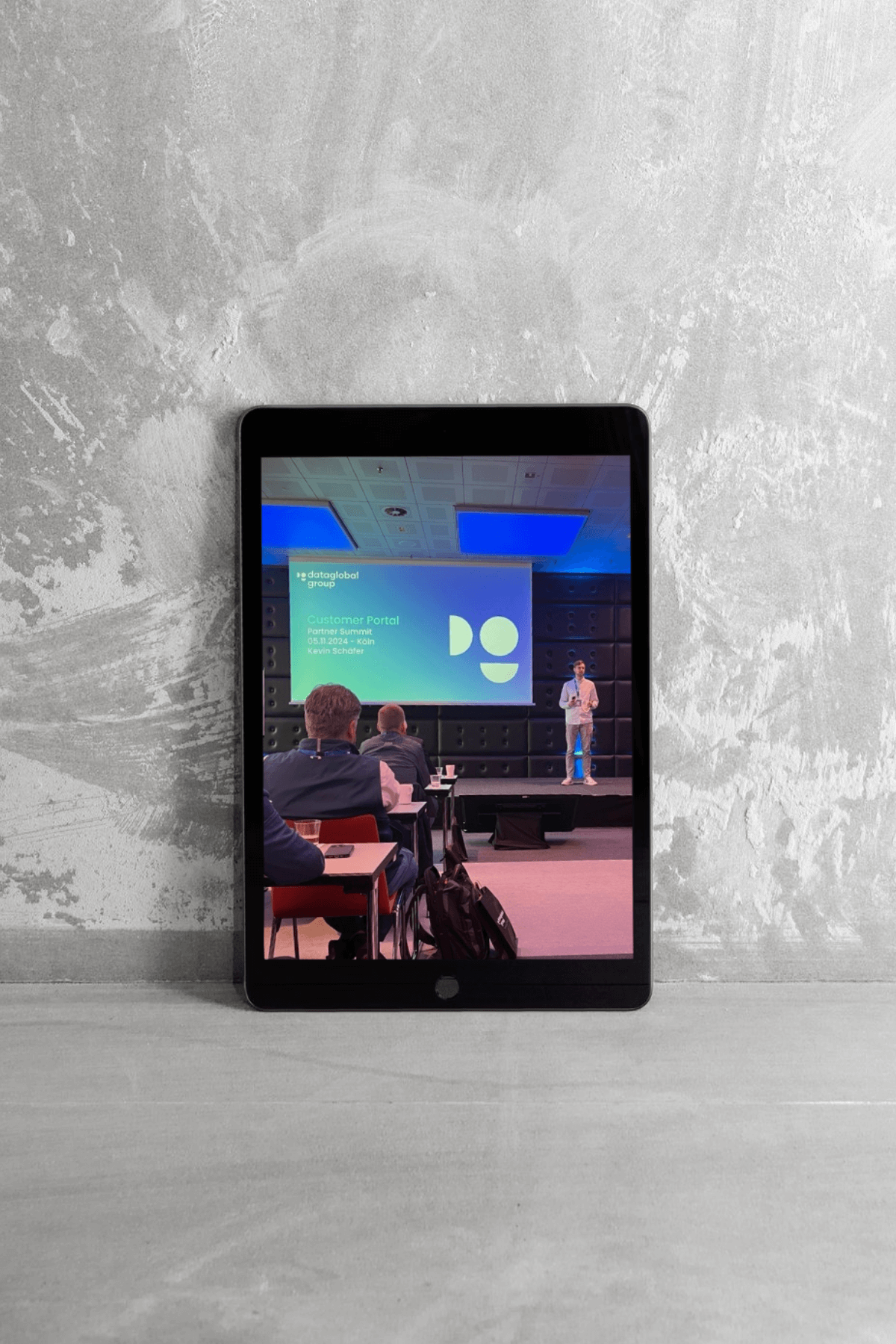
The Customer Portal was assigned to me as part of my role as Product Owner – together with our very dedicated development team from Romania. It was a great opportunity for me to get to know even more about the company and to better understand the different needs of our customers. The portal is aimed at eXpurgate customers, among others, and aims to create more self-service options. Customers should be able to make adjustments themselves and obtain information about the products they use – without always needing direct support. In the long term, the Customer Portal is intended as a central gateway to the Data City: a platform that gives customers access to many different solutions and products from the entire Group.

How did you organize the development process of the portal? Which phases were particularly exciting or challenging?

At the beginning, the development process was still quite unstructured – there were many parallel topics and no clear priorities. The first phase therefore consisted primarily of getting to know the team and the project environment better, understanding where support was needed and developing a common way of working. We introduced meeting structures and gradually shifted the focus to the really relevant topics. The close, flexible collaboration within the team was particularly exciting – we deliberately didn’t want to act too rigidly, but rather decide together what was important next. One of the biggest challenges was to organize the multitude of tasks: To do this, we structured a large pool of topics – by area such as frontend/backend, by brand or by current development status – and regularly communicated where we stood. This not only provided clarity, but also strengthened the team spirit.

What are the most important features of the new portal that you would recommend to customers?

Of course, our Customer Portal is an admin tool. It offers customers the opportunity to control many settings and processes themselves – which not only saves time, but also gives them more control over their applications. Particularly exciting is the planned integration of our vysoft solution – the next big highlight, which offers additional potential for cross-selling and further increases the benefits of the portal. So it’s worth checking back regularly – new functions and improvements are being added all the time.

How do you ensure that the Customer Portal is continuously improved? Is there a kind of feedback loop?

We are currently in close contact with internal partners such as eleven and soon also vykon – this is already helping us to gather valuable feedback and make optimizations at an early stage. As soon as the first customers are actively working with the portal in the next phase, the focus will of course also be on user feedback. The aim is to continuously gather feedback from the field in order to tailor the portal even more specifically to actual needs. In this way, we ensure that the further development not only makes technical sense, but also creates real added value for users.


Thank you very much for the interview, Kevin!

Apply now to the dataglobal Group

Are you interested in becoming part of the dataglobal Group and working with us to realize the vision of the Digital Workplace for our customers? We are always on the lookout for new talent, whether in software development or in other areas such as sales, consulting, etc.

Take a look at our current vacancies and see if there is a suitable position for you. We look forward to hearing from you!

You might also be interested in

DATEV online interface in windream ECM

learn more

Merger forms new leading provider of HR software solutions in Germany

learn more

DMS as a strategic IT topic: Why you should act now as an IT decision-maker

learn more

Digital challenges in accounting: from paper invoices to a networked financial system

learn more