


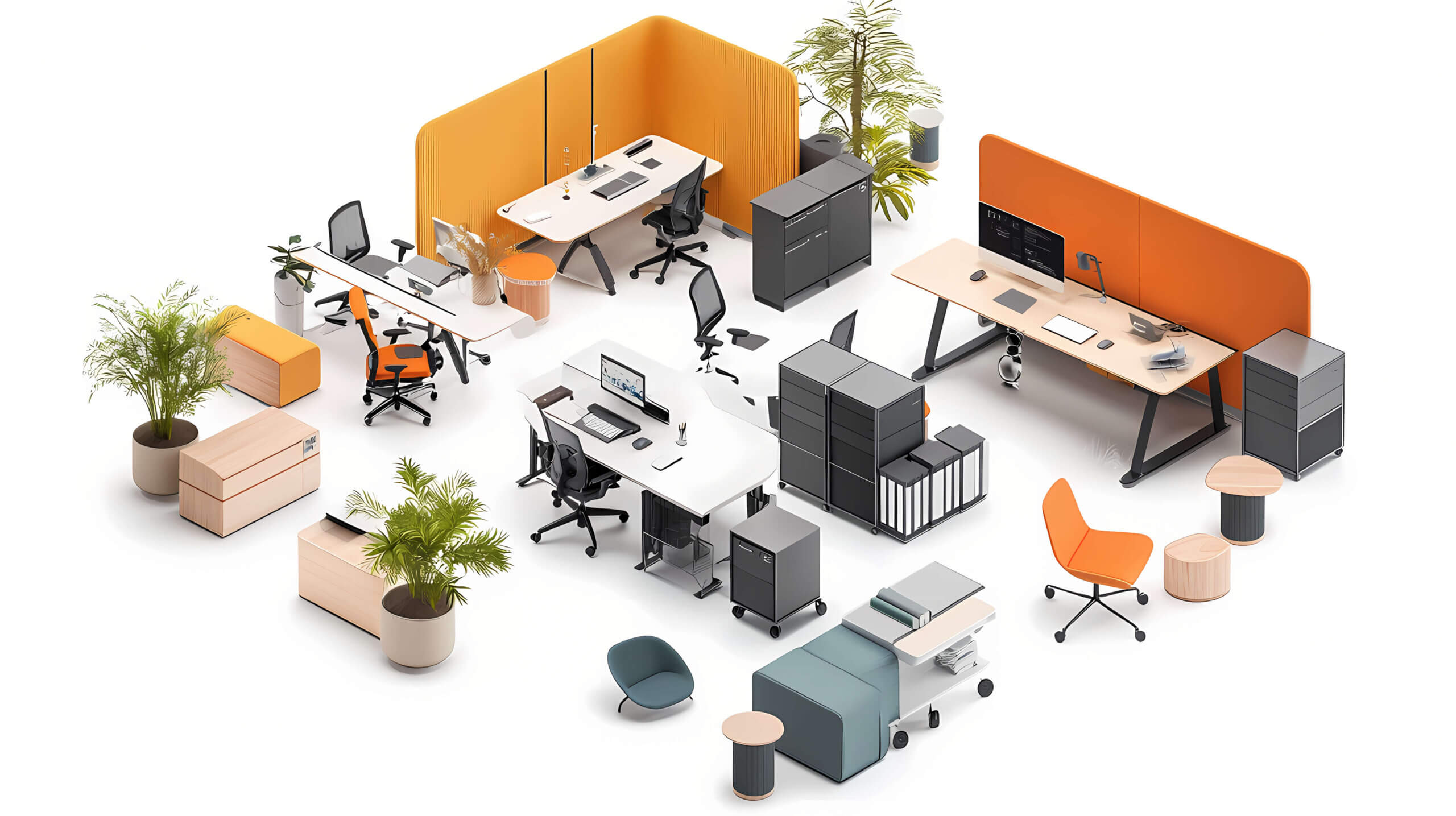

What is a Hot Desk Office?
A Hot Desk Office is a flexible workplace model in which employees do not have assigned desks. Instead, they choose an available workstation each day—depending on availability, the nature of their tasks, or their team affiliation.
Unlike traditional office setups with personal desks, hot desking offers more freedom and efficiency. Especially in hybrid work environments, where employees are not in the office every day, this model makes sense both economically and organizationally.
The concept is part of a broader shift in the world of work: companies are rethinking rigid structures, embracing greater agility, and aiming to use office space more efficiently. Particularly within the context of New Work and desk sharing, the hot desk office plays a key role—it supports an open, collaborative, and digital corporate culture.

Advantages of a Hot Desk Office
A well-functioning hot desk office offers numerous benefits—economically, organizationally, and culturally:
1) Better Space Utilization and Lower Costs
By optimizing the use of office workstations, companies can significantly reduce their space requirements. This is a major cost-saving factor, especially in cities with high rental prices. Instead of providing each employee with a permanent desk, workplaces can be planned based on attendance rates—often, a ratio of 60–70% of the total workforce is sufficient.
2) Promotion of Agility and Collaboration
By frequently changing desk neighbors, employees come into contact more often with colleagues from other departments. This encourages informal exchanges, sparks creative ideas, and fosters interdisciplinary collaboration—without the need for additional meetings.
3) Attractiveness to Modern Talent
The new generation of professionals expects flexible work models. The hot desk office aligns perfectly with the expectations of Millennials and Gen Z, who value self-directed, tech-enabled work environments. Companies that embrace this approach strengthen their position in the war for talent.
4) Support for Hybrid Work Models
When employees regularly work from home or remotely, many office desks remain unused. Hot desking provides a structured solution: employees come into the office only when it makes sense—such as for project work, team meetings, or creative sessions. Learn more [here] about how to re-engage your workforce with the office.
5) Reduction of Paper and Resource Consumption
Hot desk offices typically go hand in hand with digital workflows. Printing becomes less necessary, personal documents disappear, and cloud-based tools are used more frequently. This conserves resources and supports a more sustainable office setup.
Challenges in Implementation
As appealing as the hot desk office may sound, without clear rules and the right infrastructure, it can quickly lead to organizational chaos. HR and office managers should be aware of the following challenges from the start:
Organizational Effort and Transparency
To make the model work, a clear and user-friendly booking system is essential. Desk sharing tools help manage available workstations in real time, avoid double bookings, and track office occupancy. Room management software also enables efficient and transparent booking of office spaces—for example, for meetings.
Sense of Belonging and Identification
Employees without a permanent desk may feel disconnected or rootless. A personal workspace can foster a sense of identity. This can be countered by, for example, assigning fixed zones to teams or creating regular touchpoints such as designated team areas or quiet zones.
Tidiness and Hygiene
Without personal responsibility for a specific desk, the risk of clutter increases. Clear usage guidelines are essential: everyone must leave the workspace clean after use. Regular cleaning should also be planned and managed as part of the office routine.
Technology and Infrastructure
A workstation must be ready to use within seconds—regardless of who is using it. This requires standardized equipment (monitors, docking stations, peripherals), fast Wi-Fi, a stable cloud environment, and centralized access to documents.
Use Cases: When Is a Hot Desk Office Suitable?
Not every company needs to switch immediately to a fully hot desk-based model. However, there are certain conditions under which making the transition is particularly worthwhile:
Companies with Hybrid Work Models
If your employees regularly alternate between home and office, daily workspace demand is naturally lower. A hot desk office prevents unused capacity and encourages more focused in-office work.
Project-Based Teams
In agencies, consultancies, or IT companies where project teams change frequently, hot desking is especially effective. The flexible team setup fosters collaboration and agility.
Start-ups and High-Growth Companies
When teams grow quickly or are frequently restructured, hot desking helps keep office space scalable—without constant relocations or changes to floor plans.
Coworking Spaces
Many shared offices already use hot desking successfully. Here, it’s part of the concept: users book desks as needed—by the hour, day, or month.
5 Tips for Successfully Implementing a Hot Desk Office
A hot desk office only works when it’s integrated into the overall office culture. These best practices help HR and office managers with the implementation:
- Don’t Forget Change Management
Change requires acceptance. Involve employees early, explain the benefits, and take concerns seriously. A transparent pilot project can help reduce fears and build initial experience.
- Set Clear Rules and Policies
Which desks are bookable? What are the timeframes? How long can a space be reserved? Who is responsible for cleaning? Define clear rules and communicate them in a simple and understandable way.
- Integrate Digital Booking Systems
Tools like vysoft Desk Sharing and vysoft Room Management (RMS) help digitally reserve workstations and rooms, analyze utilization, and manage flexible work processes systematically. They prevent confusion and ensure fair usage.
- Provide Personal Storage Space
Even in a hot desk office, employees need a place for personal belongings. Mobile pedestal drawers, caddies, or lockers are simple and effective solutions.
- Create Zones for Different Work Styles
Not every desk needs to look the same: design focus zones, creative areas, team zones, and quiet spaces. This allows employees to choose the right space based on their task—and stay productive.
Conclusion: Hot Desk Office as a Building Block of the New World of Work
A hot desk office is more than just a spatial concept—it reflects a dynamic and modern work culture. Companies that design their office spaces flexibly benefit from:
- reduced costs,
- higher space efficiency,
- improved collaboration,
- and a stronger employer brand as a modern workplace.
With thoughtful planning, the right technology, and clear rules, the model can be adapted to almost any company.
Have You Seen Our Whitepaper on Hybrid Work?
vysoft offers a comprehensive solution to support hybrid work concepts. The software suite is built on Microsoft SharePoint and can be deployed both on-premises and within Microsoft 365. It helps organizations streamline and automate processes effectively. Thanks to its modular structure, vysoft can be flexibly tailored to meet specific needs and existing company structures.
Explore our offerings:
- Desk Sharing: Flexible desk booking for hybrid teams
- Room Management: Efficient scheduling of meeting and event spaces
- Parking Management: Optimized usage and allocation of parking areas
- Fleet Management: Central overview and control of company vehicles
Schedule a consultation now